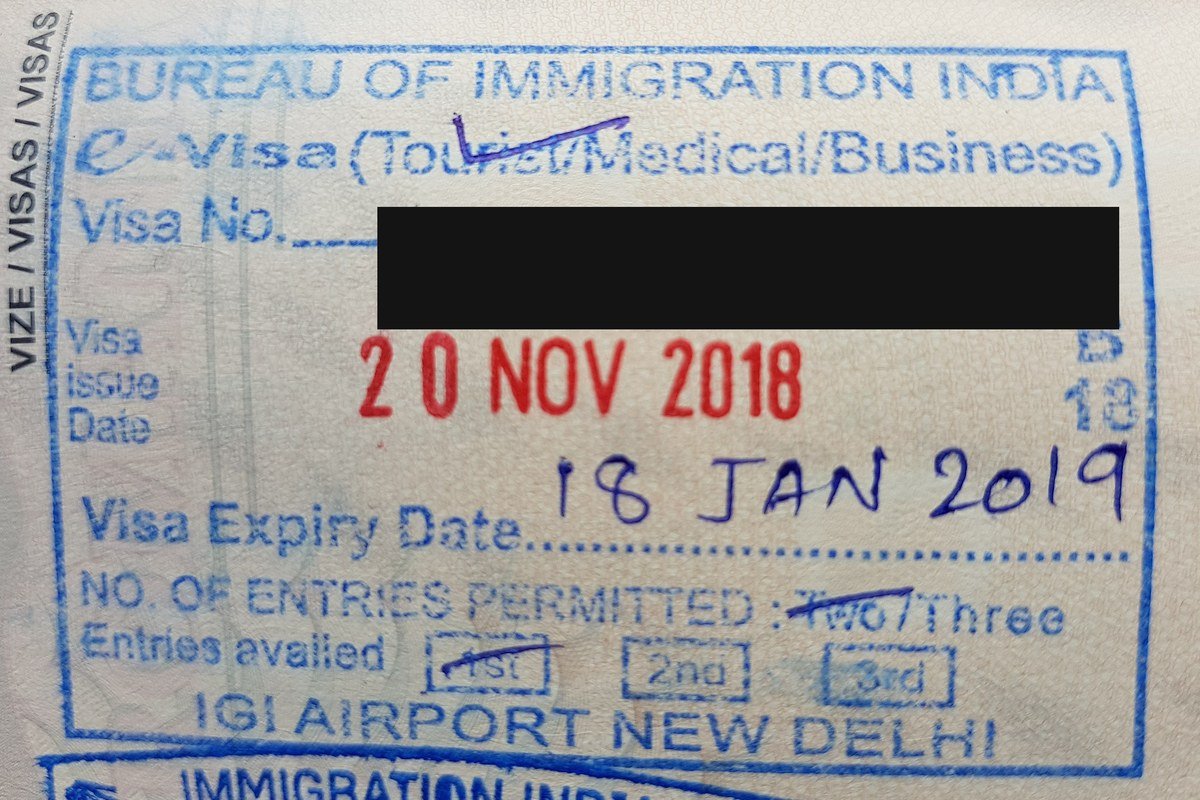
File photo: an Indian e-Visa immigration stamp. CrFilip98. Wikimedia Commons. Source URL. Published under CC BY-SA 4.0. Rotated, cropped and resized; visa number obscured.
The Ministry of Home Affairs decided on August 27, 2026 to simplify India's visa regime, cutting the main categories from 13 to nine and making application forms up to 70% leaner, The Hindu reported. Under the new structure the “Tourist Visa” is renamed “Visitor Visa”; visas under the new rules will be granted by year-end, once IT systems are updated. Here is what changes.
What the Ministry announced
The Ministry said the number of main visa categories was reduced from 13 to nine and sub-categories from 49 to 23 on August 27, 2026. That followed an earlier rationalisation in October 2025, when the main categories came down from 22 to 13 and sub-categories from 63 to 49. Required fields in the application forms across all 23 categories and sub-categories have been reduced by 65% to 70%. The government studied the visa systems of developed countries and global standards while enacting the changes, the Ministry said.
The Visitor Visa: V-1 and V-2
The renamed Visitor Visa is organised into two sub-categories. V-1 covers short-term activities such as business meetings, medical consultations, wellness retreats, short-duration medical treatment, and short-term courses in Indian languages, music, art and craft. It is granted for 30 days with multiple entries. V-2 is intended for longer-duration visits, with a validity of one year, five years or 10 years, and covers the activities permissible under V-1 plus mountaineering, for which a six-month multiple-entry visa will be granted.
Medical and student visas
The Medical Visa framework keeps separate provisions for conventional and AYUSH treatment: M-1 covers medical treatment and M-3 covers treatment under AYUSH systems, both granted for one year as a default with multiple entries. M-2 and M-4 visas cover attendants of M-1 and M-3 holders. The Student Visa is consolidated into S-1, covering school, graduate and post-graduate education, and S-2, covering PhD and research scholars, visiting faculty, internships and exchange students. Students enrolled through the Study in India portal may get an e-S1 visa for up to five years or the duration of the course, whichever is less.
Business visas
Business visas are consolidated into B-1, covering long-term, licence-based activities including setting up industrial or business ventures, and B-2, covering short-term, contract-based activities including Production Investment Business, conferences, sports, performative arts and films. A specific Production Investment Business Visa provision covers foreign subject-matter specialists, engineers and technical personnel engaged by Indian companies for work such as installation and commissioning, quality checks, essential maintenance, production, IT, training, supply-chain development and technical support.
When it takes effect
The Ministry said it is updating its IT systems to implement the changes, and visas will be granted as per the new rationalisation by year-end. The e-visa facility is currently processed through electronic travel authorisation under 13 sub-categories and is available to nationals of 172 countries.