
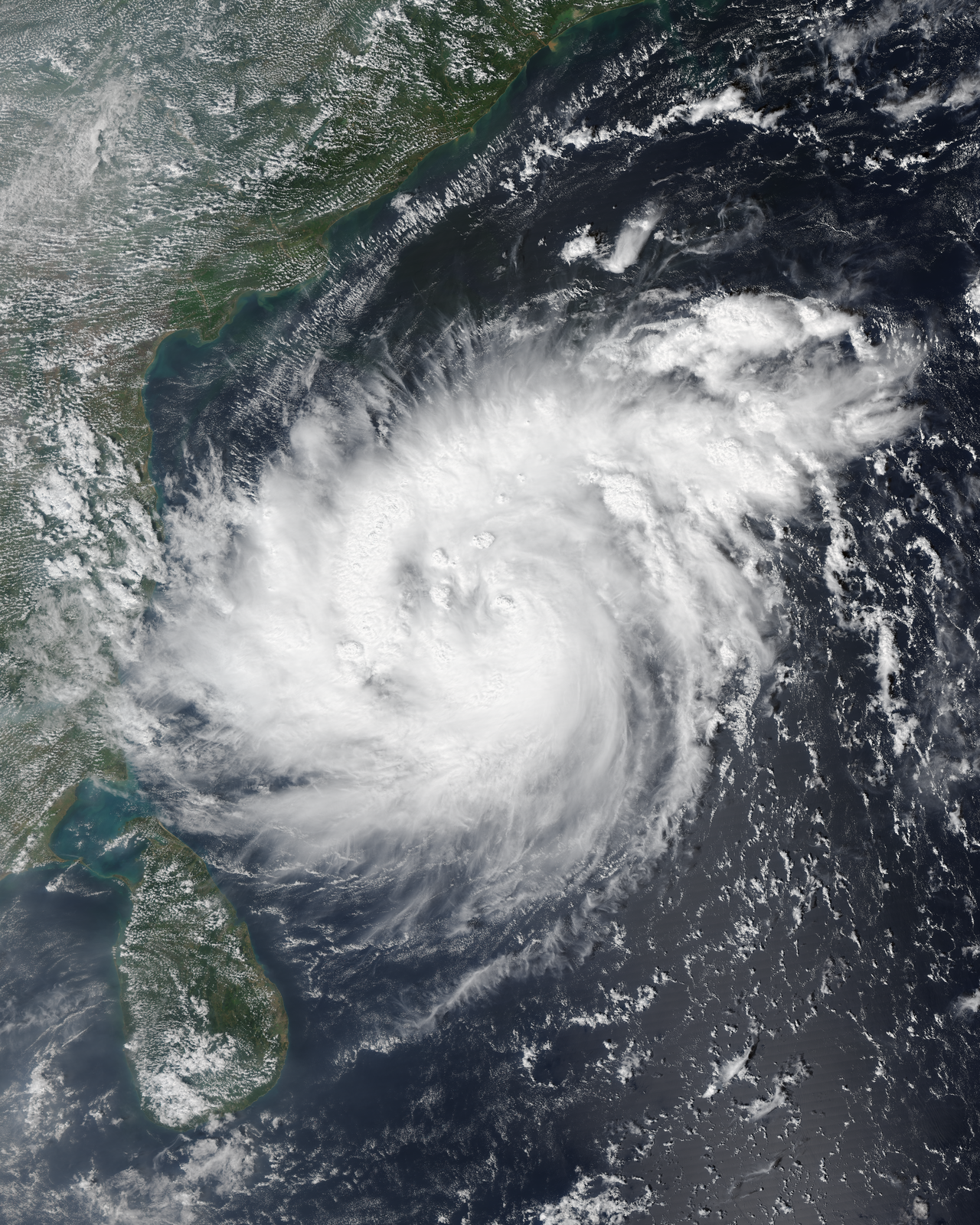
Cyclone Murasu over the Bay of Bengal on November 1, 2026. Image: VIIRS imagery from NOAA NOAA20 satellite, public domain, via Wikimedia Commons.
Severe cyclonic storm Murasu began crossing the south Andhra Pradesh coast near Ongole early on November 3, with observed winds of 110 to 120 kmph at the landfall point. The hours during and just after a landfall are when people get hurt: flying debris, falling trees, snapped power lines and flood water. The National Disaster Management Authority (NDMA) publishes a plain set of cyclone do’s and don’ts. Here is what they say, with the day’s forecast for context.
If you are in the affected districts
Stay indoors and stay calm. Switch off the electrical mains in your house. Keep doors and windows shut on the side facing the wind, and bring small loose objects inside so they cannot fly in the gale. Keep torches or emergency lights handy, store drinking water in covered vessels, and keep food that needs no cooking. Follow official bulletins, including All India Radio weather warnings, and do not spread rumours.
The eye trap
NDMA’s most repeated warning is about the lull. If the centre of the cyclone passes directly over your area, wind and rain can drop for half an hour or so. Do not step out. Very strong winds return immediately after, blowing from the opposite direction. The agency’s instruction is blunt: stay inside until it is officially announced that the cyclone has passed.
If you are told to evacuate
Leave early, before your route to higher ground or the shelter gets flooded. Do not delay and risk being marooned. Pack essentials for a few days, including medicines and special food for babies, children and elders. Head for the shelter or evacuation point indicated for your area, follow the instructions of the person in charge, and remain there until you are told you can leave. NDMA is direct about property: do not worry about it.
After the cyclone passes
The danger does not end with the wind. Strictly avoid loose and dangling wires, especially from lamp posts. Drive carefully if you must drive. Clear debris from your premises, report your losses accurately to the authorities, and get inoculated against diseases as advised. Return home only when told it is safe.
One number to remember
112 is India’s pan-India emergency number, run under the Emergency Response Support System for police, fire and health emergencies. Dial 112 from any phone. A storm surge of 1 to 1.5 metres above the astronomical tide was likely to inundate low-lying areas of Bapatla, Krishna and Prakasam from the evening of November 2 till the morning of November 3, the IMD said in its advisory issued at 3:45 a.m. IST on November 3, so people in those belts should treat any official evacuation instruction as urgent.