
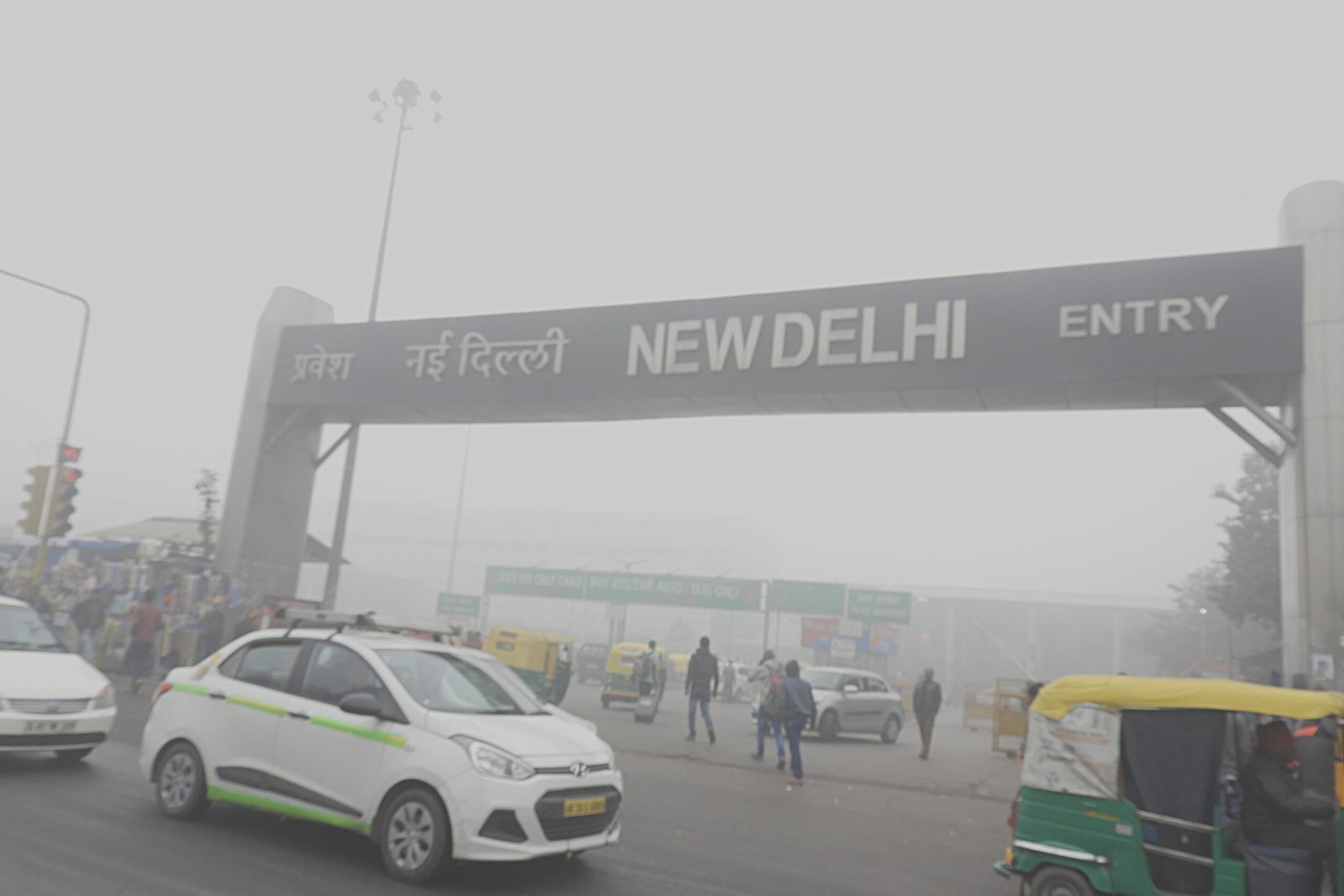
File photo: low visibility due to smog at New Delhi railway station in December 2017. Sumita Roy Dutta. Wikimedia Commons. Source URL. Published under CC BY-SA 4.0. Cropped and resized.
Delhi enters Deepavali with its air already in the red: “very poor” overall for six straight days, and “severe” in several pockets, The Hindu reported. Here is what the numbers mean and what the forecast says.
The week that was
The city’s daily Air Quality Index has stayed high all week, according to Central Pollution Control Board data: 324 on November 2, then 350 on November 3, 377 on November 4, 369 on November 5, 382 on November 6, and 369 on November 7. A higher AQI means worse air.
What the categories mean
Several areas – Dwarka, IIT Delhi, ITO, Alipur and Bawana – recorded “severe” air on Saturday. At that level, the pollution affects healthy people and seriously impacts those with existing diseases, the CPCB says.
The forecast
The Union government’s Air Quality Early Warning System for Delhi expects the air to stay “severe” from November 7 to 9, and in the “severe to very poor” band over the following six days. The burning of firecrackers during Deepavali is expected to make things worse.
What is driving it
Stubble burning in neighbouring States was expected to contribute 1.7% of Delhi’s PM2.5 on Saturday, down from 7.9% on Friday, Union Ministry of Earth Sciences data shows. The bigger structural drivers are seasonal: every winter, lower wind speeds and falling temperatures trap pollutants across Delhi-NCR and the wider Indo-Gangetic plains, with stubble smoke and festive firecrackers adding to vehicles and dust.