
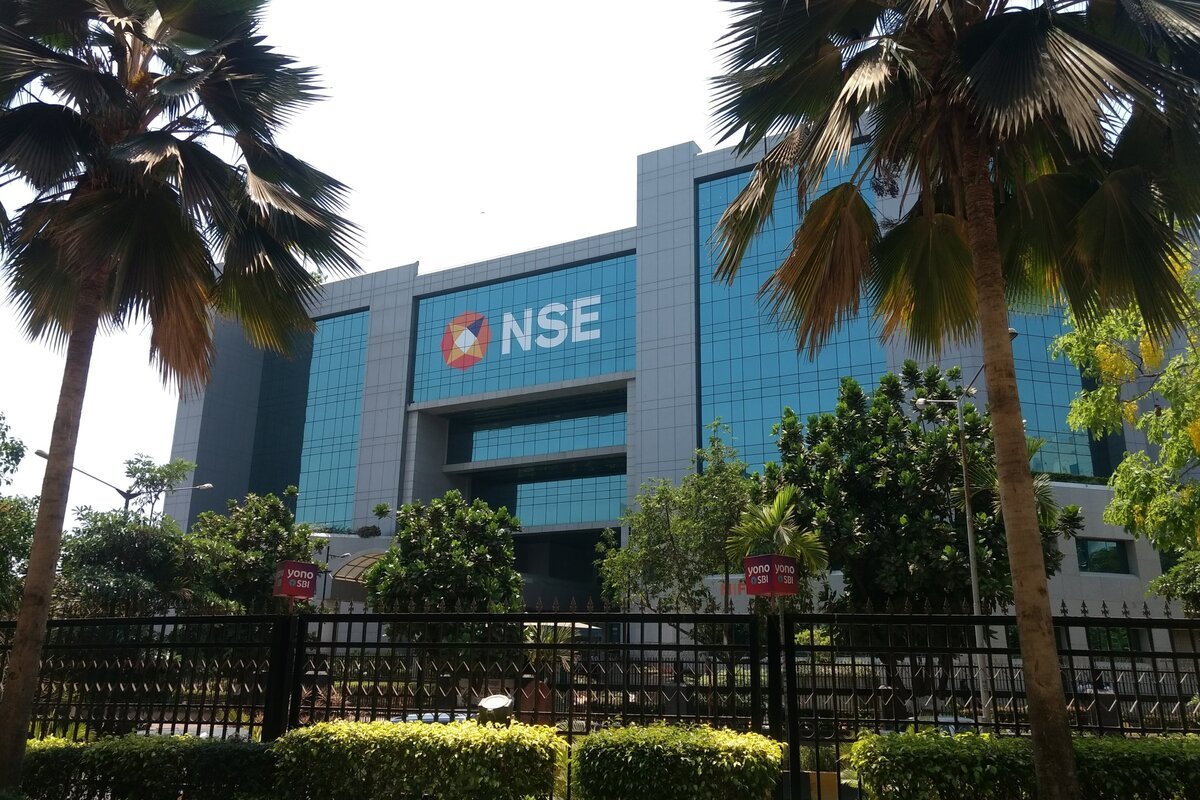
File photo: the National Stock Exchange in Mumbai. Ganesh Dhamodkar. Wikimedia Commons. Source URL. Published under CC BY-SA 4.0. Cropped and resized.
Foreign portfolio investors turned net buyers of Indian equities in the first week of November, The Hindu reported. Here is what the numbers show, and what market watchers say they do not yet prove.
The numbers
Provisional exchange data show foreign institutional investors purchased Indian shares worth a net Rs 45,960 crore during the five trading sessions ended November 6, 2026. That exceeded the Rs 45,162 crore in net selling recorded during October. The recovery came alongside an 8.58 percent rise in the Nifty 50, which closed at 25,030.35 on November 6.
Why the shift
Foreign investment into India has been buffeted by global risk aversion, fluctuations in crude oil prices, changing interest-rate expectations and concerns over equity valuations; the latest inflows suggest at least some of these pressures may be moderating. “The renewed FPI interest is encouraging and reinforces India’s position as a compelling long-term investment destination,” said Kamlesh Shroff, national president of the Association of NSE Members of India, pointing to India’s domestic fundamentals and growth outlook. The RBI’s October policy review projected real GDP growth of 7.1 percent for 2026-27 while flagging inflationary and geopolitical risks.
The bigger picture
One strong week sits against a heavy year: cumulative FPI outflows from Indian equities in 2026 have reached Rs 3.08 lakh crore, substantially exceeding the Rs 1.66 lakh crore withdrawn during the whole of 2025. Domestic institutional investors, whose buying had long countered FPI withdrawals, sold a net Rs 24,197 crore during the latest week – a reversal of roles that illustrates the shifting balance between domestic and overseas participation.
What would confirm a trend
Market experts cautioned that one week of buying does not necessarily indicate a sustained reversal. The direction of portfolio flows will depend on corporate profitability, relative valuations, monetary conditions and external developments, analysts said; sustained investment would require continued economic growth, stable macroeconomic conditions and confidence in the long-term earnings prospects of Indian companies.