
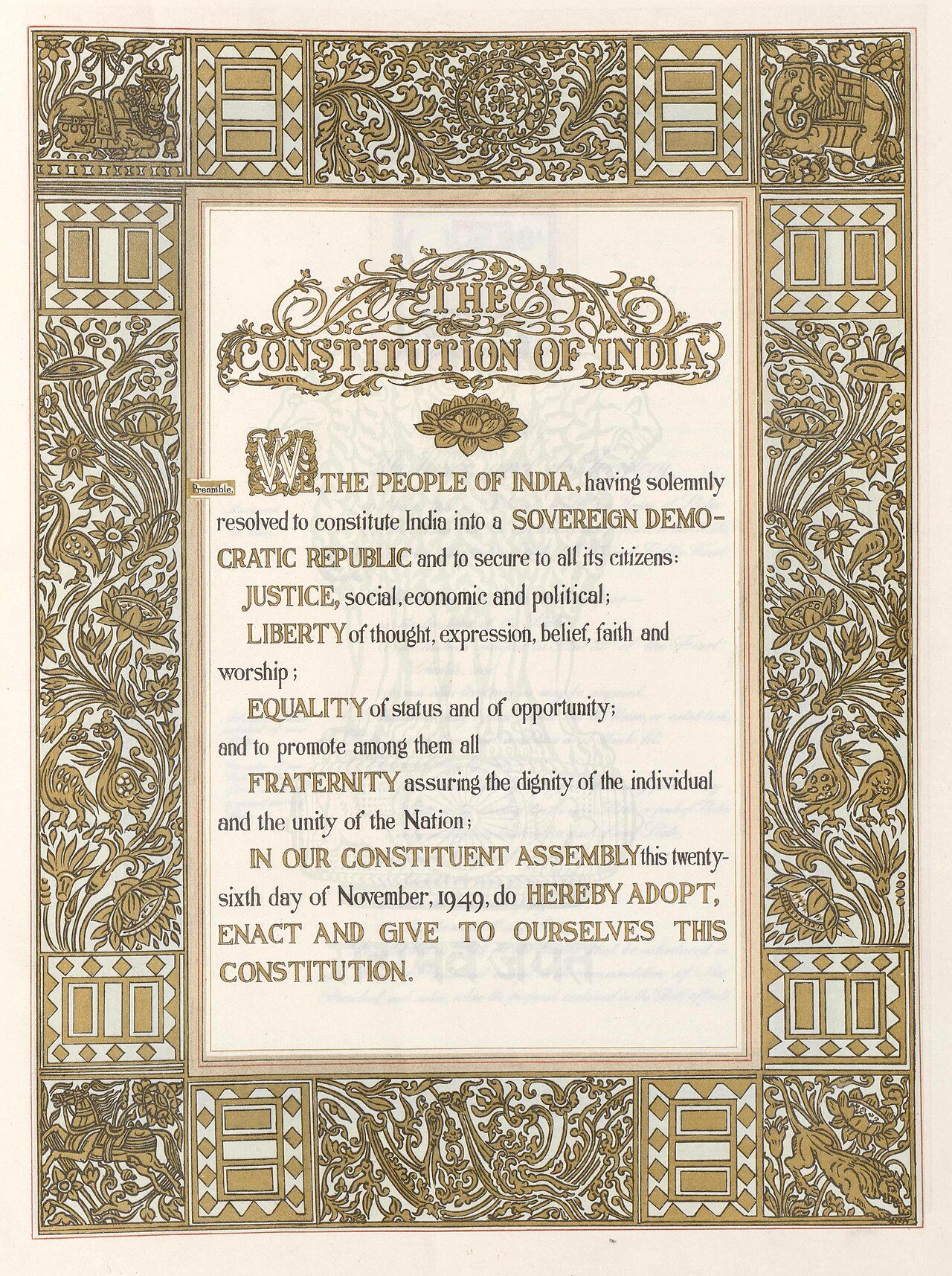
The original Constitution of India, calligraphed and illuminated, 1948. Illumination by Beohar Rammanohar Sinha, calligraphy by Prem Behari Narain Raizada. Constitution of India.jpg. Wikimedia Commons. Source URL. Public domain.
The INDIA bloc’s “Chalo Dilli” march on November 1 against Chief Election Commissioner Gyanesh Kumar is, at its core, a fight over the Special Intensive Revision (SIR) of electoral rolls. The revision rests on two short provisions of the Representation of the People Act, 1950, read with Article 324 of the Constitution. Here is what they actually say, and what each side claims.
Article 324: the constitutional umbrella
Article 324(1) of the Constitution vests the “superintendence, direction and control of the preparation of the electoral rolls for, and the conduct of, all elections to Parliament and to the Legislature of every State and of elections to the offices of President and Vice-President” in the Election Commission. Every roll exercise, including an SIR, traces back to this power.
Section 21: routine revision, and the special kind
Section 21(2) says the roll for each constituency shall be revised before every general election and every bye-election, and in any other year “if such revision has been directed by the Election Commission”. Section 21(3) then adds: “Notwithstanding anything contained in sub-section (2), the Election Commission may at any time, for reasons to be recorded, direct a special revision of the electoral roll for any constituency or part of a constituency in such manner as it may think fit.” A proviso keeps the existing roll in force until the special revision is completed. An SIR is this section at work.
Sections 22 and 23: deletions need a hearing
Section 22 lets the electoral registration officer amend, transpose or delete an entry after such inquiry as the officer thinks fit, “after proper verification of facts in such manner as may be prescribed”. Before deleting a name on the ground that the person has ceased to be ordinarily resident or is otherwise not entitled, the proviso requires the officer to give the person “a reasonable opportunity of being heard”. Section 23 covers fresh inclusion through applications such as Form 6. These are the provisions at the centre of the Bengal row over 16.10 lakh appeals: the question raised is whether the officials who filed them were the authorities the Act recognises for electoral rolls, as The Hindu reported.
What the two sides claim
The Opposition’s October 31 “public impeachment” motion accused the CEC of conspiring with the BJP to steal elections, deleting voters’ names, changing Form 6 without parliamentary oversight, centralising rolls through ERONET/ECINET, excluding the two other Election Commissioners from decisions, and acting at the behest of the Prime Minister and the Home Minister; Rahul Gandhi claimed 13.3 crore voters had been deleted. The BJP rejected the charges: MP Sambit Patra said not a single vote had been stolen, that about 12 crore voters had permanently shifted, 2.8 crore names were deleted on death and nearly 1 crore duplicates removed, and that only a declaration was added to Form 6 – which, he claimed, the Supreme Court’s May 27, 2026 judgment had addressed clearly. Those are the rival claims; the sections above are the legal frame they are fighting inside.